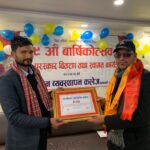
Empowering Young Voices Through Diplomacy: Lotus Eye Model United Nations (LEMUN),2026
 Padam Bahadur Saud |
२१ श्रावण २०८३, बिहीबार
Padam Bahadur Saud |
२१ श्रावण २०८३, बिहीबार Empowering Young Voices Through Diplomacy: Lotus Eye Model United Nations (LEMUN),2026
A reflection on a three-day journey o

f leadership, dialogue, and global citizenship
In today’s rapidly changing world, young people need more than academic knowledge; they need opportunities to think critically, communicate confidently, collaborate effectively, and lead with purpose. Model United Nations conferences provide exactly that platform, transforming classrooms into spaces where students become diplomats, negotiators, and problem-solvers.
With this vision, Lotus Eye Secondary School, Attariya, in close collaboration with Bolanya Thali — Freedom of Speech, successfully organized the Lotus Eye Model United Nations (LEMUN) 2026, a three-day educational conference dedicated to nurturing the next generation of leaders. The event was further strengthened through the support of our Knowledge Partners: World Youth for Climate Justice (WYCJ) and TechEx Community.
A Platform for Learning Beyond the Classroom
Unlike traditional classroom learning, LEMUN 2026 challenged students to step into the role of global policymakers. Forty students from Lotus Eye Secondary School represented different countries, debated pressing international issues, negotiated solutions, and drafted resolutions all while following authentic United Nations procedures, from formal roll calls to moderated caucuses and roll-call voting.
The conference featured two specialized committees, each tackling a globally relevant agenda:
United Nations Environment Programme (UNEP)
Agenda: Strengthening Global Action to Address Climate Change and Protect the Environment
Delegates explored how nations can safeguard the planet while promoting sustainable economic opportunity, debating topics ranging from carbon emission reduction and climate adaptation to biodiversity conservation, plastic pollution, climate finance, and environmental justice. The committee brought together twenty nations spanning every inhabited continent from renewable energy leaders like Norway, Denmark, and Costa Rica, to climate-vulnerable states like Fiji and Pakistan, to major forest and biodiversity nations including the Democratic Republic of the Congo, Peru, and Indonesia ensuring a rich and balanced diplomatic debate.
United Nations Educational, Scientific and Cultural Organization (UNESCO)
Agenda: Promoting Safe and Responsible Use of Artificial Intelligence and the Internet Among Young People
This committee focused on digital literacy, ethical AI, online safety, and responsible innovation in an increasingly technology-driven world covering issues such as child online safety, misinformation, data privacy for minors, mental health and social media, and the digital divide. Delegates represented twenty nations at the forefront of the digital and AI landscape, including the United States, China, India, the United Kingdom, France, Japan, and South Korea, alongside rising digital economies such as Nigeria, Kenya, and Nepal.
These globally relevant agendas encouraged students to analyze complex issues from multiple perspectives and work collaboratively toward practical, resolution-based solutions.
Three Days of Growth, Dialogue, and Inspiration
The conference unfolded over three memorable days.
Day One marked the beginning of an inspiring journey with the Opening Ceremony, where delegates were introduced to diplomatic procedures before stepping into formal debates and committee sessions.
Day Two witnessed intensive committee negotiations, moderated caucuses, unmoderated lobbying sessions, and the drafting of working papers alongside an engaging cultural program that celebrated creativity and teamwork. A major highlight of the day was two expert guest lectures on Artificial Intelligence and Human Rights, offering participants valuable insights into some of today’s most pressing global challenges.
Day Three brought the conference to its formal close with the United Nations General Assembly (UNGA), where committee outcomes were presented, debated, and voted upon before the full Assembly followed by the Closing Ceremony and recognition of outstanding delegates.
Recognizing Excellence
To encourage academic excellence and diplomacy, each committee presented awards across three categories:
- Best Delegate
- Best Position Paper
- Best Strategy
These awards recognized students who demonstrated exceptional research, leadership, diplomacy, and strategic thinking throughout the conference.
Leadership Behind the Conference
The successful execution of LEMUN 2026 was made possible through the dedication of a committed organizing team and Executive Board.
The conference was led by Secretary-General Padam Bahadur Saud and Deputy Secretary-General Nirajan Balayar, whose leadership ensured the smooth planning and implementation of the event.
The committee sessions were guided by experienced Executive Board members:
UNEP
- Chair: Gaurav Kathayat
- Co-Chair: Prapti Bhatta
UNESCO
- Chair: Neelam Awasthi
- Co-Chair: Ashish Awasthi
Their professionalism, mentorship, and commitment created an environment where every delegate felt encouraged to participate confidently.
The Role of Boln aya Thali — Freedom of Speech
At Bolanya Thali — Freedom of Speech, we believe that meaningful change begins when young people are empowered to express ideas freely, engage in respectful dialogue, and participate actively in democratic processes.
Our collaboration with Lotus Eye Secondary School for LEMUN 2026 reflects this mission. Supporting educational initiatives that promote critical thinking, civic engagement, leadership, and responsible communication is central to our commitment to youth empowerment. By working alongside schools, educators, and youth organizations, we aim to create opportunities where students not only learn about global challenges but also develop the confidence and skills to contribute to meaningful solutions.
A Lasting Impact
One of the most rewarding aspects of LEMUN 2026 was witnessing students evolve throughout the conference. Many participants entered the committee rooms with limited experience in public speaking and diplomatic debate. By the closing session, they were confidently presenting arguments, negotiating resolutions, and engaging respectfully with diverse viewpoints.
Beyond learning parliamentary procedure and international relations, students strengthened essential life skills communication, collaboration, leadership, research, negotiation, and critical thinking skills that will continue to serve them in their academic journeys and future careers.
Looking Ahead
LEMUN 2026 demonstrated the transformative power of experiential learning. It showed that when students are trusted with responsibility and given meaningful opportunities, they rise to the challenge with remarkable creativity and confidence.
At Bolnaya Thali Freedom of Speech, we remain committed to supporting initiatives that encourage youth participation, democratic values, and leadership development. We look forward to collaborating on many more educational programs that empower young people to become informed citizens, compassionate leaders, and active contributors to society.
The conversations that began during these three days should not end with the closing ceremony. They should inspire continued learning, thoughtful dialogue, and meaningful action because today’s student delegates are tomorrow’s leaders.
Together, let us continue to create spaces where every young voice is heard, every idea is respected, and every future leader is empowered.
Written by Padam Bahadur Saud, Secretary, Bolnaya Thali Freedom of Speech